
At the Osaka Expo 2025, Indonesia showcased its vision for sustainable and inclusive infrastructure development. Through the PPP Business Forum, we highlighted innovative financing strategies and global partnerships to unlock future opportunities.
A Glimpse into Indonesia’s Vision for Sustainable Infrastructure at the Osaka Expo 2025
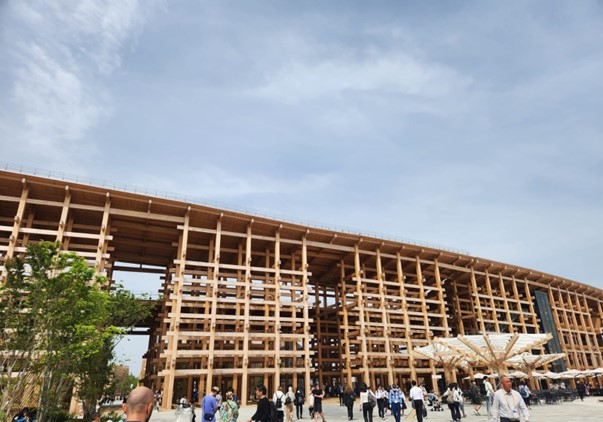
On May 19th 2025 in Osaka, I had the privilege of attending the PPP Business Forum at the Indonesian Pavilion, part of the World Expo 2025 Osaka, held on Yumeshima Island. Arriving early at Yumeshima Station around 9 AM, I was impressed by the calm orderliness despite the growing crowds. The end-of-spring breeze and Japan’s meticulous crowd management set the tone for what would be an inspiring day.
As soon as I enter, I was welcomed by the majestic sight of the Expo’s signature giant ring structure, a symbol of unity and innovation. Entering the Indonesian Pavilion, I was struck by its seamless fusion of modern architecture and traditional Indonesian motifs — a perfect backdrop for the day’s theme: “Innovative Financing: Unlocking Opportunities for Sustainable Development.
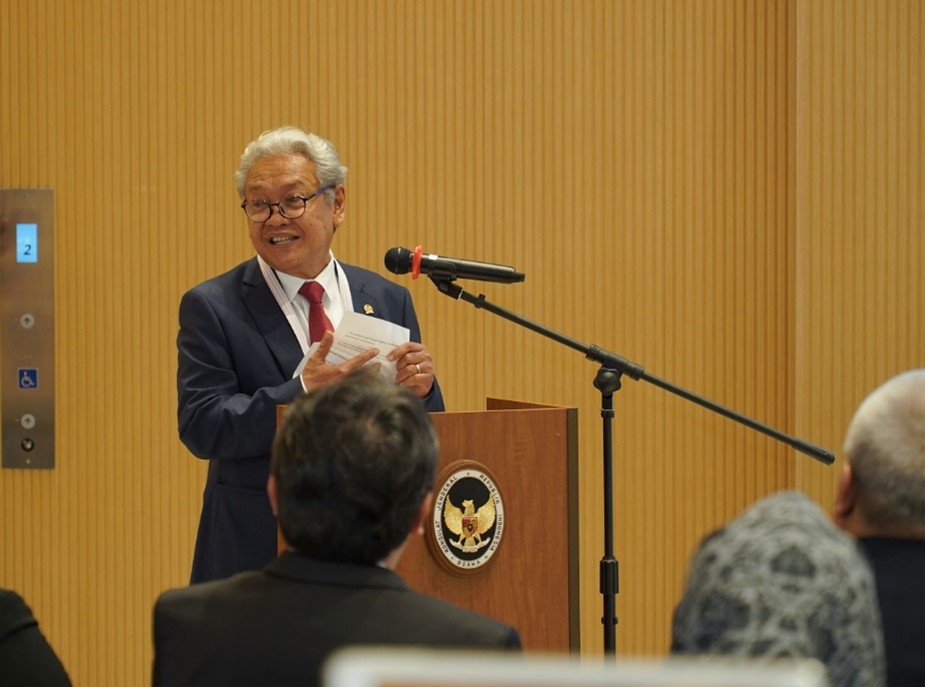
Opening the forum, Ambassador of the Republic of Indonesia to Japan, Heri Akhmadi, emphasized the importance of deepening collaboration between Indonesia and Japan to unlock green infrastructure financing. “We need global partnerships, fresh financing ideas, and smarter ways to act on them,” he said. “Japan is one of our most trusted long-term partners.” The forum brought together policymakers, development financiers, and international partners to explore collaborative approaches for resilient, inclusive, and sustainable infrastructure development.
The Indonesian government, through Bappenas, PT SMI, and PT PII, emphasized that achieving 8% national economic growth as targeted in the 2025–2029 RPJMN will require infrastructure investment of over Rp 10,303 trillion. This demand necessitates innovative financing mechanisms that go beyond public budgets. To support this, the government has put in place several instruments to strengthen Public-Private Partnerships (PPPs), including the Project Development Facility (PDF) which provides advisory support and capacity building to Contracting Agencies, the Viability Gap Fund (VGF) to improve commercial feasibility of critical projects, Infrastructure Government Guarantees to mitigate risks and enhance investor confidence, and the Availability Payment scheme, enabling PPPs in sectors with limited revenue streams. Deputy of Development Funding and Investment, Putut Hari Satyaka highlighted the importance of building ecosystems, not just projects, citing creative local government initiatives like land value capture and green bonds as examples of bottom-up innovation that complement national strategies.
From the fiscal side, the Ministry of Finance underscored the importance of embedding ESG (Environmental, Social, Governance) principles into publicly supported projects. This aligns with investor expectations, especially from Japan, where impact and transparency are key. PT SMI shared their experience managing SDG Indonesia One, a platform connecting feasible projects with green investors, while PT PII emphasized the role of government guarantees not only as a risk-mitigation tool but also as a commitment signal to private investors.

The session concluded with one-on-one meetings between Indonesian institutions and Japanese stakeholders, paving the way for future collaboration in sectors like healthcare, clean water, and renewable energy. MUFG Bank, a key Japanese player in ESG finance, reaffirmed that Indonesian projects hold great potential — as long as they are financially sound, impactful, and globally aligned.
Based on my experience, it was clear that The Expo wasn’t just about ideas — it was about building real pathways to a greener, more inclusive future. And to me the Indonesian Pavilion made a strong statement: Indonesia is open for sustainable development.
Written by:
Febri Trivitas